See It In Action
NS-eMSDS Screenshots
Click any screenshot to enlarge
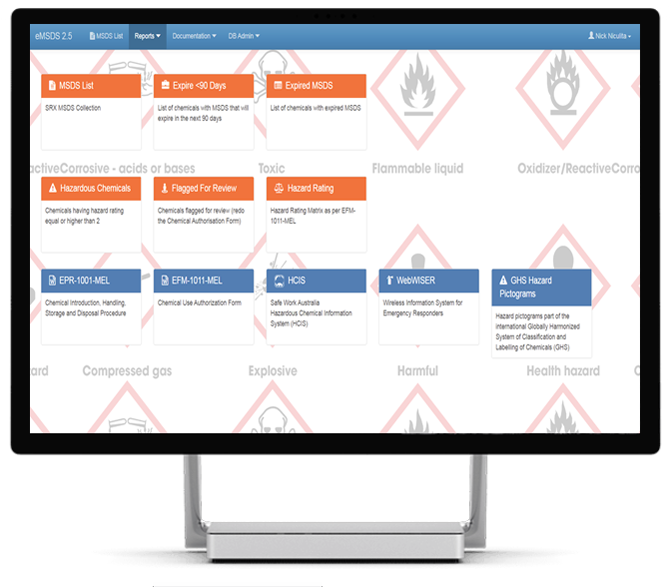
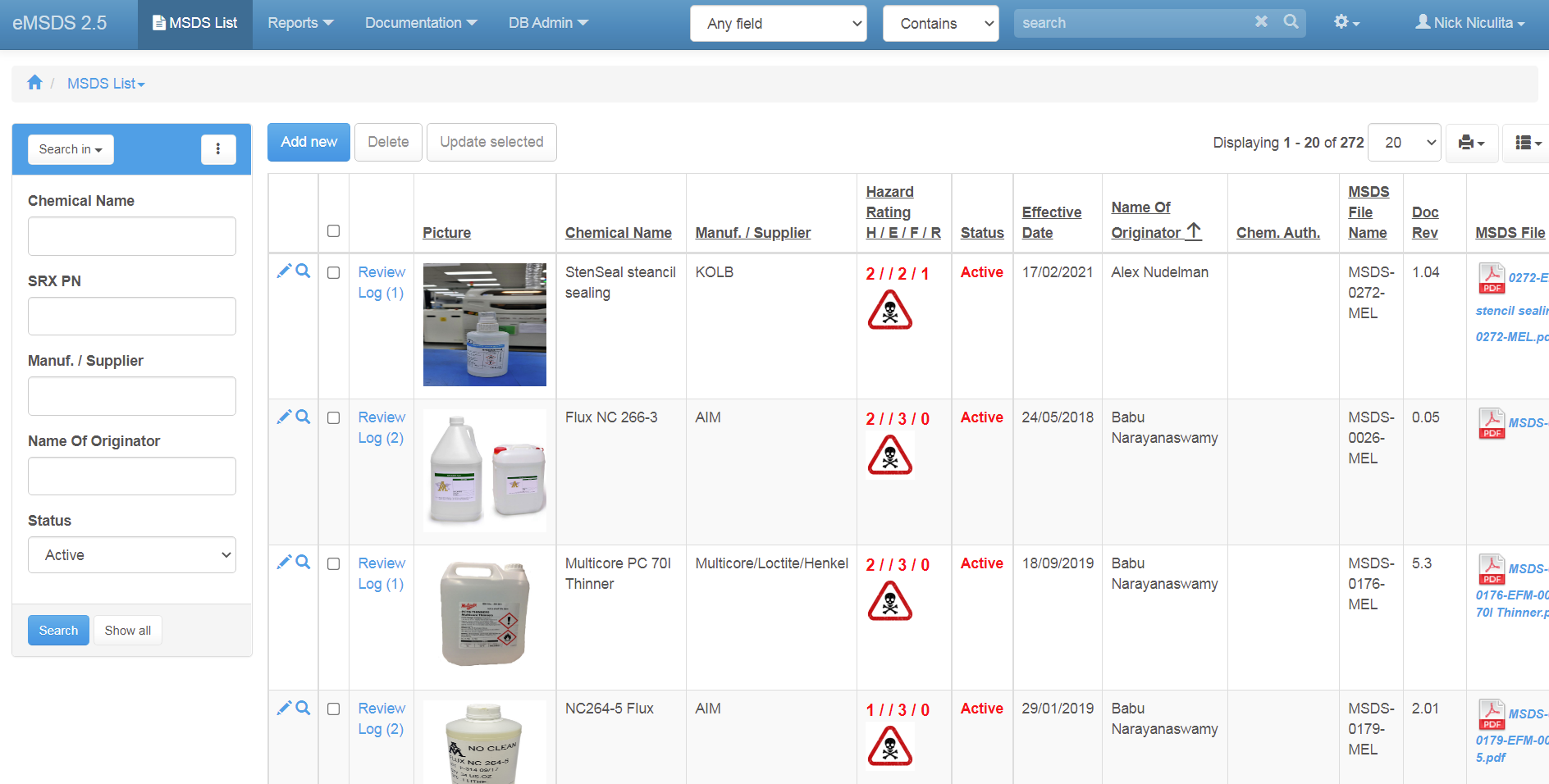
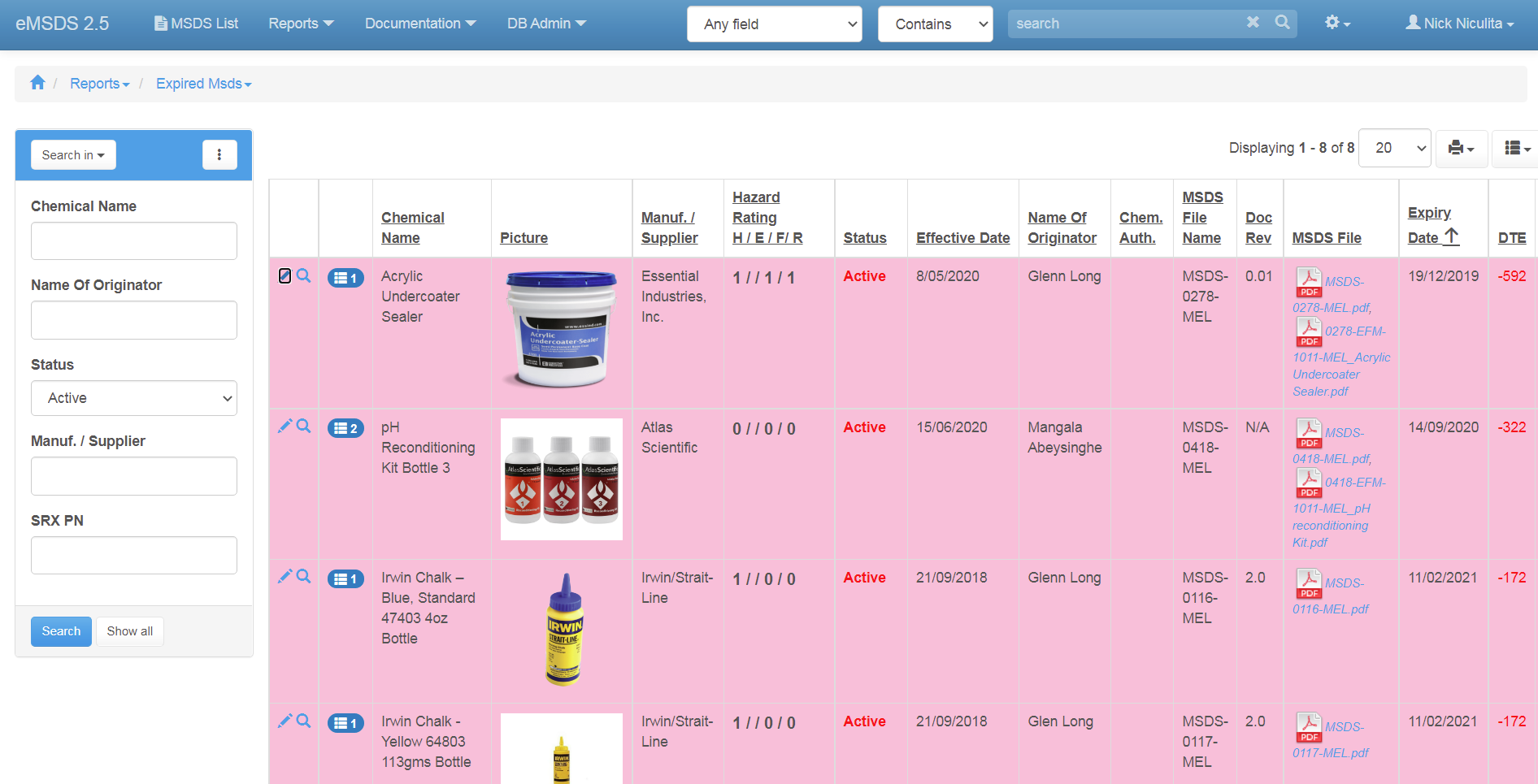
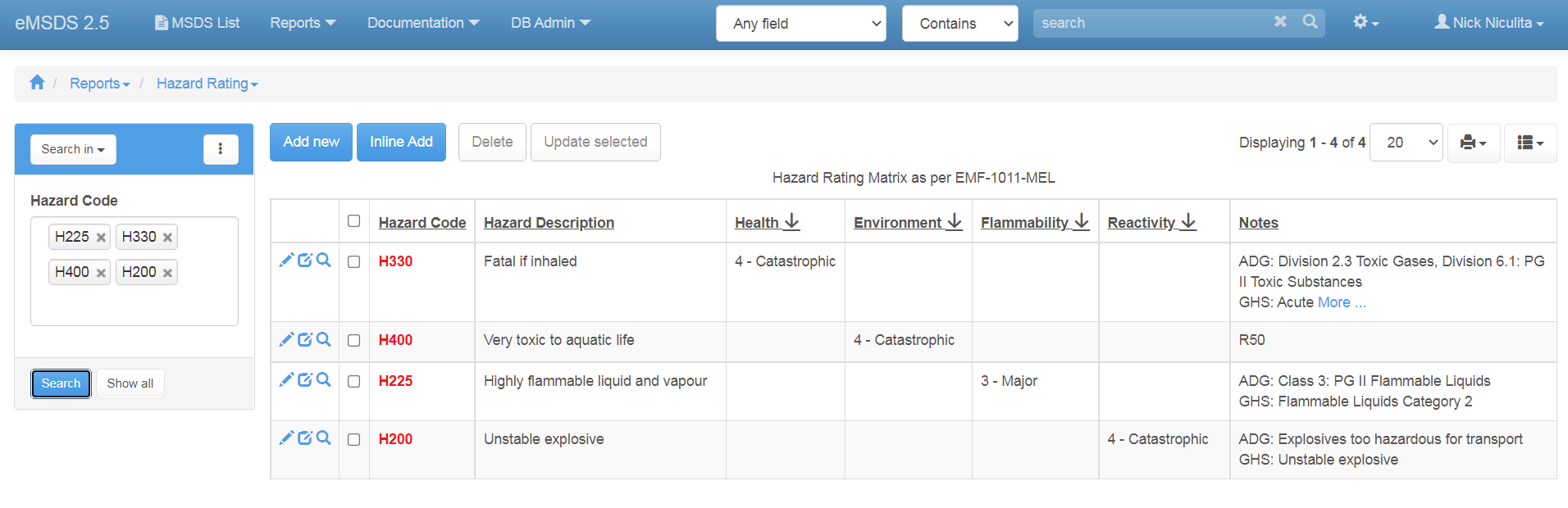
SDS/MSDS management software with expiry tracking, GHS hazard ratings, and mobile access. Keep your chemical documentation compliant and accessible at receiving, stores, and on the factory floor.
SDS (formerly MSDS) = Safety Data Sheet. NS-eMSDS helps you maintain a central register, keep versions current, and surface hazards fast during audits and incidents.
Paper filing cabinets full of MSDS are a thing of the past. NS-eMSDS gives you a centralised, searchable database with automatic expiry warnings - so you never fail an audit due to outdated documentation.
5-year validity tracking with automatic 90-day warnings. Never have an expired SDS in your system.
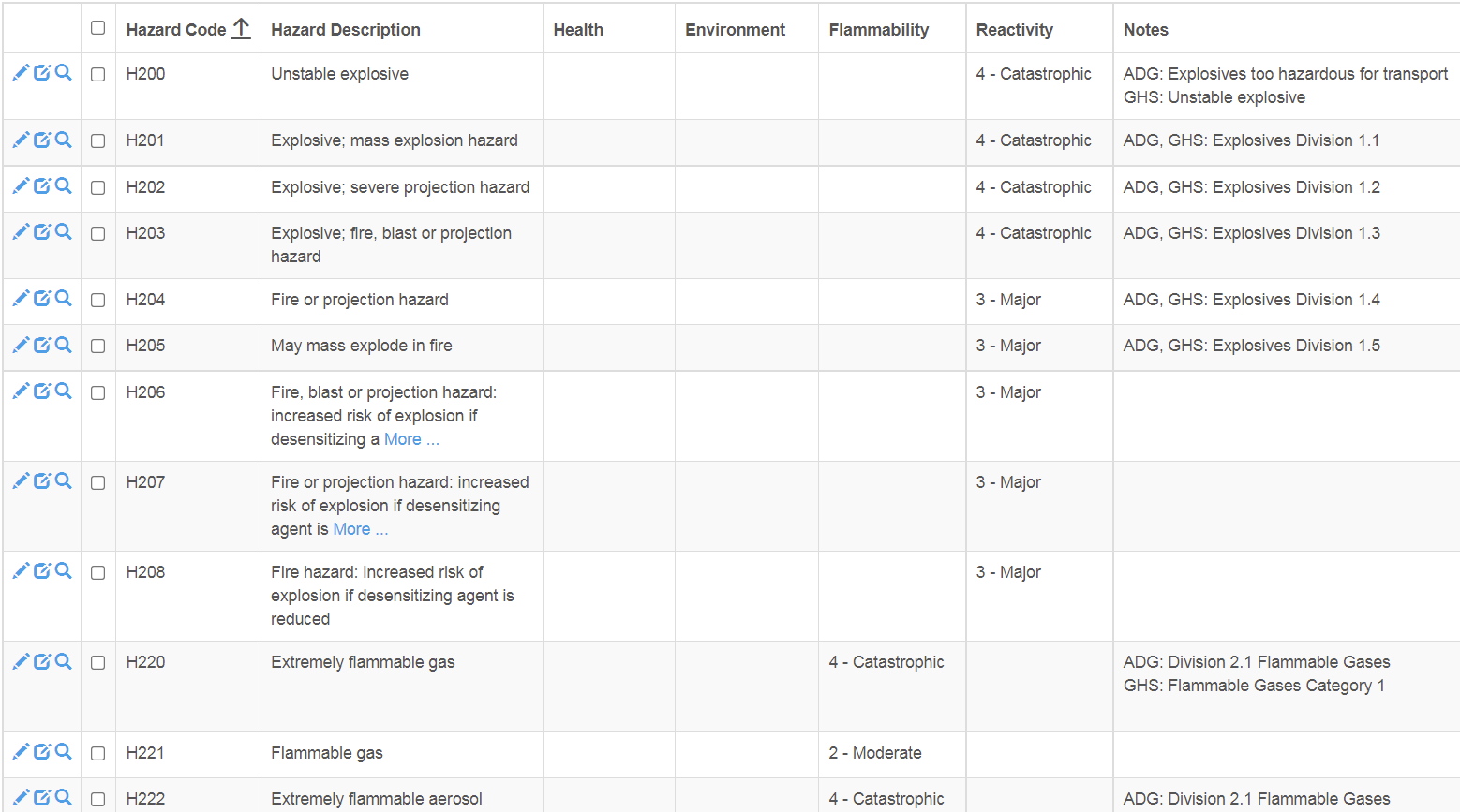
GHS/ADG 0-4 scale for Health, Flammability, Reactivity, and Environment. Calculated from H-codes and R-codes.
Scan QR codes to jump directly to supplier websites for the latest SDS version.
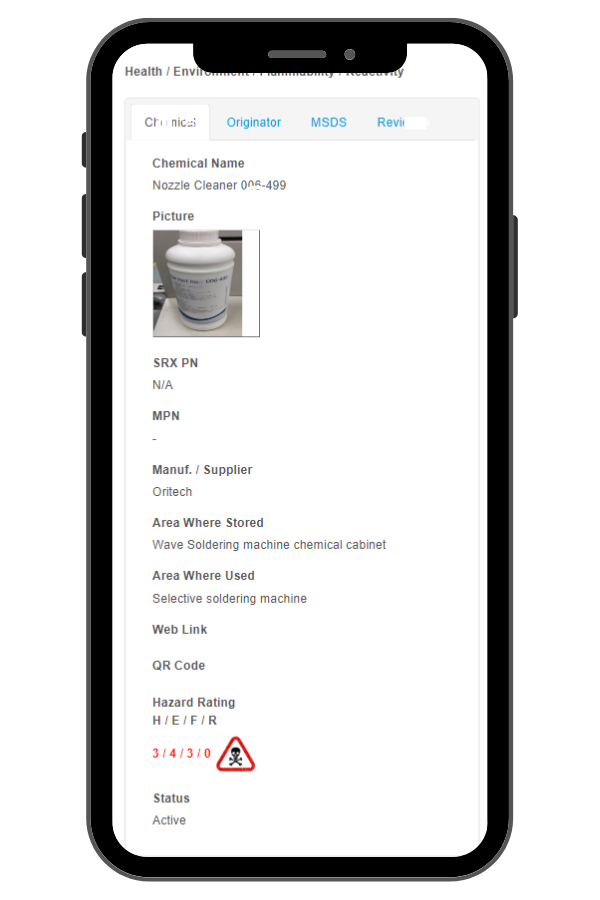
Access SDS from phones and tablets on the factory floor. Find chemical information anywhere.
Chemical authorisation forms integrated with SDS records. Complete chemical documentation.
Find any chemical instantly. Search by name, supplier, hazard class, or expiry status.
Visual hazard ratings calculated from H-codes and R-codes on a 0-4 scale.
Acute toxicity, irritation, sensitisation, organ effects
Flash point, ignition temperature, combustibility
Oxidisers, water reactivity, self-reactive, unstable
Aquatic toxicity, persistence, bioaccumulation
Click any screenshot to enlarge
Centralise your chemical documentation, automate expiry tracking, and access SDS from anywhere.
MSDS is an older term. SDS (Safety Data Sheet) is the current standard format used for chemical safety information in many regions.
Store each SDS with its issue/revision date and set reminders or reports for documents nearing expiry so you can request updated sheets from suppliers.
Yes. You can record key GHS details such as hazard classes, pictograms and risk information for fast reference.
Anyone who handles, stores or is exposed to chemicals—typically production, maintenance, lab, stores and WHS roles. Access can be provided via a central web-based system.
Yes. Upload SDS PDFs and maintain searchable chemical records so staff can find the right sheet quickly.
Yes. Generate or export reports for internal reviews and audits (e.g. to Excel/CSV/PDF) depending on what your auditors require.